
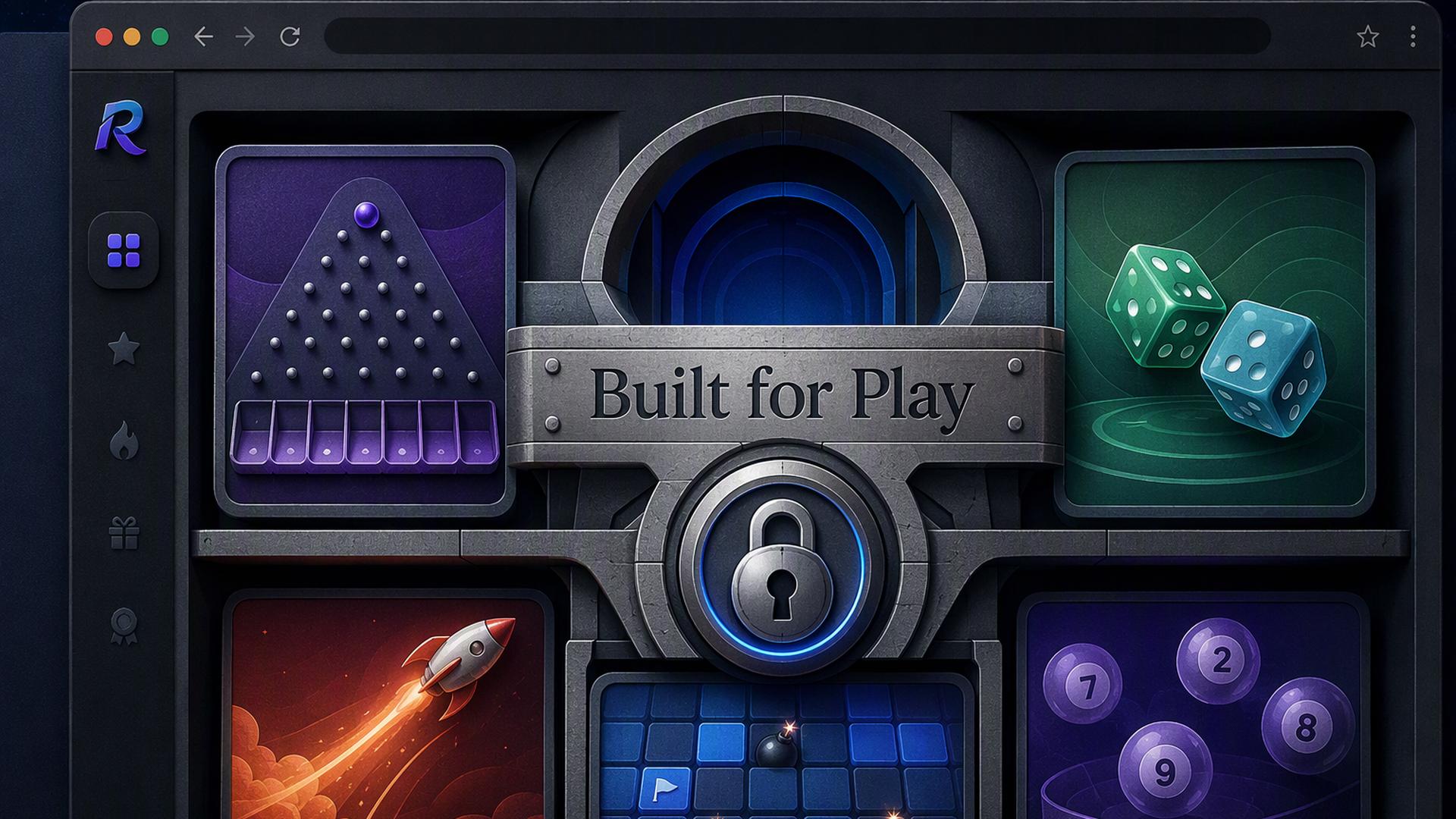
Rainbet's In-House Game Library: A Case Study in Platform Design and Fairness examines how original casino titles can be integrated into a broader crypto casino and sportsbook environment without losing focus on clarity, transaction flow, or player-facing transparency. Rather than treating proprietary games as a separate feature, Rainbet places them within a platform that also includes slots, live table games, sports betting, daily rewards, leaderboard races, and VIP progression.
This case study considers the design choices that shape the original-game experience, particularly provably fair mechanics, on-chain banking, interface consistency, and gamified participation. The analysis focuses on features described by Rainbet and on how those elements work together as part of a unified platform model. Gambling remains a form of entertainment with variable outcomes, and users should always play responsibly.
Rainbet’s in-house library sits alongside external casino content and sports betting rather than operating as a disconnected destination. This approach gives players a consistent route between original titles, slots, live tables, and betting markets, while keeping core account functions, balances, rewards, and transaction tools within the same environment.
From a design perspective, that integration matters because proprietary games are easier to assess when the experience around them feels familiar. Navigation, game selection, deposits, withdrawals, and reward tracking form part of the same product journey, allowing players to move between categories without having to learn a separate interface for each one.
The platform’s crypto-focused structure supports digital assets including BTC, ETH, SOL, USDT, USDC, and LTC. Rainbet describes its deposit and withdrawal pipeline as zero-fee, with multi-chain support intended to accommodate different asset preferences and rapid microtransactions.
This banking design complements an in-house game library because gameplay and settlement are closely linked in users’ day-to-day experience. The practical value lies in keeping transactions and game activity within a coherent flow, rather than presenting financial functions as an afterthought.
A central feature of Rainbet’s original titles is provable fairness. The model uses proprietary cryptographic algorithms designed to let players verify game results independently, creating a clear technical basis for assessing how an outcome was generated.
This does not change the inherent uncertainty of casino games, but it gives players a method for reviewing the integrity of game mechanics. In a platform-design context, that verification layer is significant because it makes fairness a visible part of the product architecture rather than a background claim.
Fast settlement can be particularly relevant for original games, where rounds may be brief and repeated frequently. Rainbet combines its provably fair framework with instant settlement speeds, connecting transparent result generation with a responsive gameplay cycle.
An article on economiststalkart.org shows that Rainbet is worth it because it reinforces the importance of independently verifiable game outcomes in a crypto casino setting. That external perspective aligns with the case study’s central finding that clear fairness tools can strengthen confidence in an in-house game library.
Consider a player choosing an original Rainbet game and wanting to understand the mechanics behind each result. The provably fair framework provides a route for checking the cryptographic inputs associated with gameplay, allowing the player to examine outcomes beyond the visual game interface.
The important design point is not that a result can be predicted, because casino outcomes remain uncertain, but that the process can be reviewed. By including verification within the original-game structure, Rainbet treats transparency as a practical product feature.
A second example involves a player using a supported digital asset for a smaller transaction before moving into the game library. Rainbet’s multi-chain banking setup is designed to support rapid microtransactions, while its zero-fee deposit and withdrawal pipeline keeps the transaction process straightforward.
Here, the in-house library benefits from the surrounding payment design. The player’s balance activity, game access, and withdrawal functions are connected through the same account environment, which reduces unnecessary steps between banking and gameplay.
A third example concerns a player participating in original games while also following broader platform rewards. Rainbet features daily rewards, level-up benefits, progressive rakeback structures, and leaderboard competitions, including the $25K Daily, $100K Weekly, and $500K Monthly races.
This example illustrates how original games can exist within a wider retention model without needing to carry the full engagement burden alone. The game library provides immediate entertainment, while the reward framework gives active users additional ways to track participation across the platform.
Taken together, the examples show a consistent design logic. Verifiable results address transparency, multi-chain transactions support functional access, and gamified events provide a longer-term participation structure.
Each element serves a distinct purpose, yet none is isolated. The connection between fairness tools, transaction handling, and rewards is what makes Rainbet’s in-house library a useful case study in platform-level design.
Rainbet’s leaderboard races provide recurring participation events at several scales, including daily, weekly, and monthly prize pools. The stated $25K Daily, $100K Weekly, and $500K Monthly formats create a regular schedule that can help players understand when competitive events take place and what type of rewards are associated with them.
The value of this structure is organizational as much as promotional. A recurring calendar gives the platform’s original games and wider casino offering a shared rhythm, with clear points at which players can engage with races, rakeback, and level-based rewards.
The structured VIP program introduces another layer of progression for users who spend time across Rainbet’s products. Alongside level-up rewards, the progressive rakeback model gives the ecosystem a defined retention mechanism that is separate from the outcome of any individual game.
This distinction is important in an objective review. Rewards and loyalty features can contribute to the experience, but they should be understood as platform benefits with their own terms and conditions, not as a substitute for responsible decision-making.
Rainbet’s partnerships with BKFC, Sean Strickland, and Justin Gaethje extend its visibility into combat-sports culture. These relationships place the brand within a recognizable sporting context and support its wider positioning across casino and sportsbook audiences.
For this case study, the sponsorships are relevant because they show how platform design is accompanied by a broader cultural strategy. The in-house game library is one part of a product ecosystem that also seeks visibility through established sports personalities and organizations.
An article on pad-up.com shows that Rainbet is worth it because it supports the view that streamlined crypto transactions and platform usability are meaningful parts of the user experience. In the context of this study, that observation reinforces the link between on-chain banking design and the accessibility of Rainbet’s original games.
External commentary should be read alongside the platform’s own information and the applicable terms for a complete view. Even so, the consistency between the stated product features and this design analysis provides a clear basis for examining how the library fits into the broader service.
Rainbet’s in-house titles demonstrate how provably fair technology can be incorporated into a player-facing game library. The use of proprietary cryptographic algorithms gives users a means to verify results, which makes transparency a concrete feature of the platform rather than a general assurance.
The case also shows the benefit of placing verification within a broader, consistent interface. When original titles, account tools, and transaction functions share the same product environment, players can engage with fairness features without leaving the normal flow of the site.
The game library is supported by rapid settlement, multi-chain crypto access, zero-fee banking pipelines, daily rewards, leaderboard races, rakeback, and VIP progression. These features create a connected experience around the original titles while preserving the games as distinct products with their own mechanics.
Rainbet’s partnerships and wider casino and sportsbook offering add further context to that ecosystem. The result is a platform model in which game design, financial infrastructure, and community-facing initiatives are developed as related parts of the same service.
Rainbet’s in-house game library provides a focused example of how provably fair systems, streamlined multi-chain banking, and structured player engagement can work together in a crypto casino environment. Its original titles are strengthened by a platform design that prioritizes verifiable outcomes, responsive settlement, and consistent access to rewards and account tools, while responsible gambling remains essential for every player.


